
Vascular
Vascular Spot Laser Treatment
Doctor-Led Laser Treatment for Cherry Angiomas, Haemangiomas and Broken Capillaries
Benign vascular spots such as cherry angiomas and small haemangiomas are common and usually harmless, but they can be cosmetically bothersome or prone to catching, bleeding or irritation.
At The Skin Doctor, we provide doctor-led laser treatment for selected vascular lesions, with a simple guiding principle:
accurate diagnosis first, careful treatment second.
Because vascular lesions vary in depth, behaviour and appearance, a medical assessment is essential before any laser treatment is performed.
If your concern relates to background redness or flushing rather than individual spots, see: Rosacea and facial redness Treatments
Vascular
What Are Vascular Spots?
Vascular spots are benign collections of superficial blood vessels within the skin. Common types include:
Cherry Angiomas
Small, bright red or purple vascular bumps that become more common with age.
Campbell de Morgan Spots
Another name for larger or more dome-shaped cherry angiomas.
Small Haemangiomas
Benign vascular growths often present from childhood, or occasionally appearing later in life.
Telangiectasia / Broken Capillaries
Visible clusters of small, dilated blood vessels, most commonly on the face.
These lesions are generally harmless, but many people seek treatment for cosmetic reasons or if the lesion bleeds, catches, grows or becomes irritated.
Vascular
Why a Consultation Is Essential
Before treating any vascular lesion with laser, your doctor will:
- Take a medical history, including medications and relevant skin conditions
- Examine the lesion to confirm it is benign
- Assess your skin type and risk of pigmentation or scarring
- Determine whether laser is appropriate, or whether monitoring or referral is recommended
- Discuss the expected number of treatments
- Explain downtime, aftercare and costs
If a lesion appears suspicious or atypical, laser treatment will not be performed and appropriate medical follow-up will be advised.
Vascular
How Laser Treatment Works
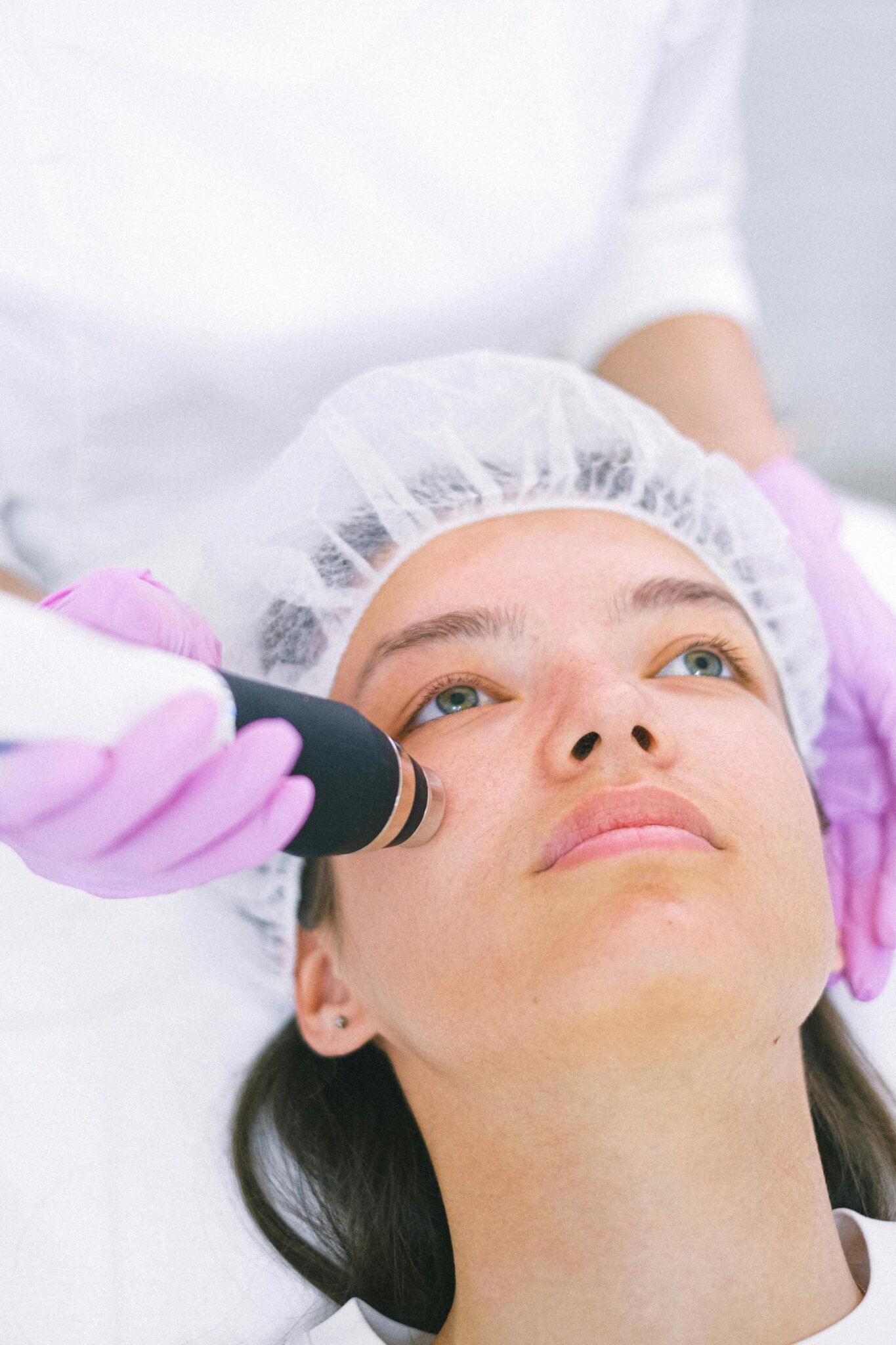
Vascular lasers deliver controlled energy that is selectively absorbed by haemoglobin (the pigment in blood). This gently heats and collapses the targeted vessel while leaving surrounding skin largely unaffected.
At The Skin Doctor, laser settings are selected based on:
- Lesion type
- Depth and colour
- Your skin tone
- Location on the body
Vascular laser treatment works by delivering controlled energy that is selectively absorbed by haemoglobin (the pigment in blood), causing targeted vessels to collapse while surrounding skin is preserved.
At The Skin Doctor, we use a long-pulsed 1064 nm Nd:YAG laser, a wavelength widely used in medical practice for the treatment of vascular lesions because of its ability to penetrate deeper into the skin and safely treat a broad range of vessel types.
Nd:YAG laser treatment may be particularly useful for:
- Deeper or more resistant vascular lesions
- Diffuse background redness
- Larger facial vessels and feeder vessels
- Treatment in a wider range of skin tones when conservative settings are used
Laser parameters are carefully selected based on:
- Lesion type and depth
- Vessel size and colour
- Your skin tone and pigmentation risk
- Treatment location
This individualised approach helps maximise effectiveness while prioritising safety.
Vascular
What to Expect during Treatment
On the Day
- The skin is cleansed and protective eyewear applied
- Precise pulses of laser light are delivered to the lesion
- You may feel a brief snapping or warm sensation
- Cooling may be used depending on the device
- Many vascular spots require only a few pulses
After Treatment
It is common to experience:
- Temporary redness
- Mild swelling
- Darkening or greying of the treated spot
- Light crusting as the lesion resolves
These effects usually settle over several days. Most patients return to normal activities immediately unless advised otherwise.
Vascular
How Many Treatments Are Needed?
This depends on the lesion type and depth:
- Small cherry angiomas: often 1–2 sessions
- Flat vascular spots: 1–3 sessions
- Deeper or thicker haemangiomas: may require multiple sessions
- Broken capillaries: often treated in a staged series
Your doctor will discuss realistic timelines during your consultation.
Vascular
Medicare Rebates for Vascular Laser Treatment
In certain clinical circumstances, vascular laser treatment may be eligible for a Medicare rebate under item number 14106.
Important points to understand:
- Eligibility depends on your individual clinical presentation and whether Medicare criteria are met
- Not all vascular laser treatments are Medicare-rebatable
Some patients who have reached their Extended Medicare Safety Net threshold may find that Medicare contributes a higher proportion of the cost of eligible laser services for the remainder of the calendar year – making state of the art care very affordable.
If Medicare eligibility is relevant to you, this can be discussed in detail with your doctor during your consultation, including whether item 14106 may apply in your situation. No guarantees can be made prior to assessment.
Vascular
Risks and Considerations
All medical laser treatments carry risks. Possible risks include:
- Temporary darkening of the lesion
- Redness or swelling
- Mild blistering or crusting
- Post-inflammatory hyperpigmentation (more common in darker skin types)
- Recurrence of vascular lesions over time
- Rarely, scarring
Strict sun protection is recommended after treatment to reduce pigmentation risk.
Vascular
Is Laser Suitable for All Skin Types?
Laser treatment for vascular lesions is generally safest in lighter skin types, but may be used cautiously in medium to darker skin tones depending on:
- Wavelength selection
- Laser settings
- Lesion depth
- History of pigmentation issues
Your doctor will advise whether laser is appropriate or if alternative management is recommended.
FAQs
Frequently Asked Questions
Are vascular spots dangerous?
Most cherry angiomas and small haemangiomas are benign. A consultation ensures correct diagnosis before treatment.
Will the spot come back?
Treated lesions often clear or fade significantly. New vascular spots can appear over time due to genetics, ageing or sun exposure.
Is treatment painful?
Most patients describe a brief snapping or warm sensation that is well tolerated.
Is there downtime?
Downtime is usually minimal. Some lesions darken before flaking off over several days.
Vascular
Ready to Take the Next Step?
If you have a vascular spot or broken capillary you’d like assessed, a consultation allows us to determine:
- Whether the lesion is benign
- Whether laser treatment is appropriate
What outcome is realistic for your skin type
Vascular
Related Pages