Photodynamic Acne Therapy
Photodynamic Acne Therapy
20% ALA with Red LED Light Activation
Standard PDT, Advanced Protocols & Laser-Assisted PDT (LA-PDT)
Evidence-Led Treatment for Persistent and Inflammatory Acne
At The Skin Doctor, Photodynamic Acne Therapy (PDT) is offered as a doctor-supervised, evidence-based treatment for selected patients with moderate to severe acne.
Acne is a complex inflammatory disease driven by sebaceous activity, follicular dysfunction, bacteria, and immune response. PDT targets these pathways directly and can be particularly helpful when acne is:
- Persistent or inflammatory
- Associated with significant oil production
- Not adequately controlled with skincare or medication alone
We actively follow and incorporate modern, peer-reviewed research to refine how PDT is delivered — aiming to maximise effectiveness while reducing pain, downtime, and treatment burden wherever possible.
Photodynamic Acne Therapy
What Is Photodynamic Acne Therapy? What we treat
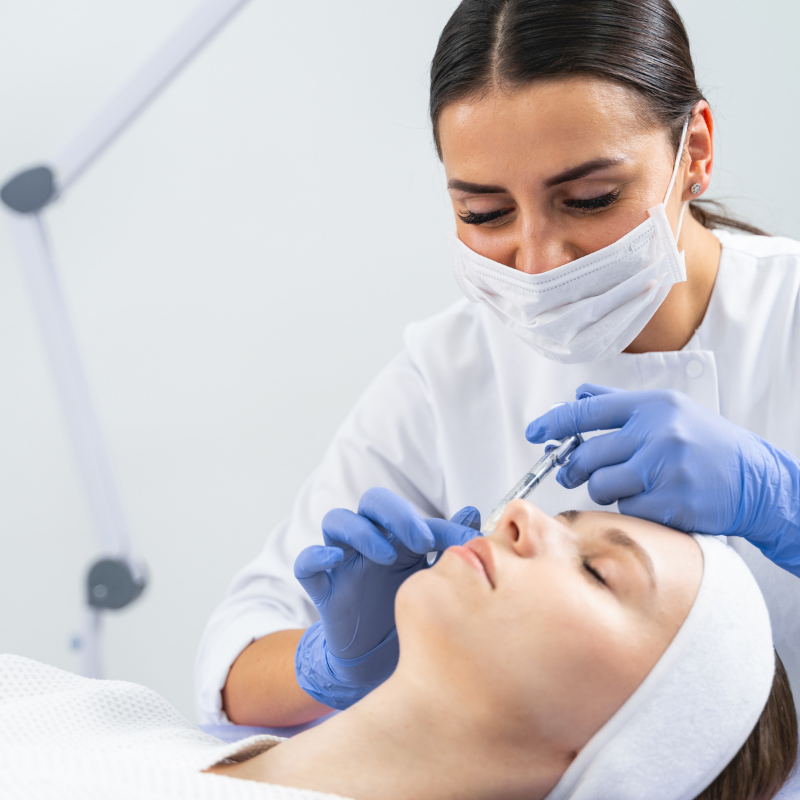
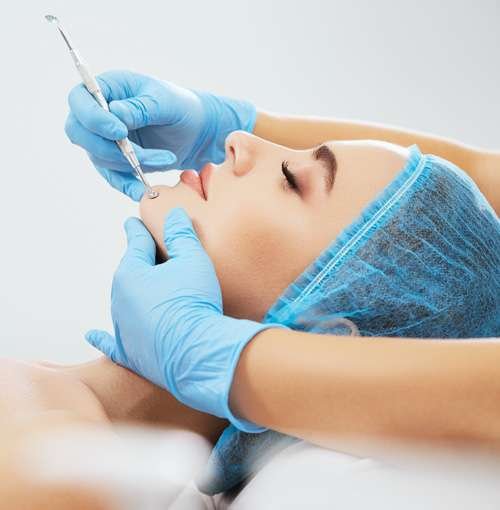
Photodynamic Acne Therapy combines a topical photosensitising agent with controlled light activation to selectively target acne-driving structures within the skin.
Aminolevulinic Acid (ALA) 20%
Aminolevulinic acid (ALA) is applied to the skin and preferentially accumulates within:
- Sebaceous (oil) glands
- Acne-prone follicles
Within these structures, ALA is converted to protoporphyrin IX (PpIX) — the active photosensitiser.
Red LED Light Activation
Medical-grade red LED light activates PpIX, triggering a controlled photochemical reaction that may:
- Reduce sebaceous gland activity
- Suppress acne-associated bacteria
- Modulate inflammatory pathways involved in acne
Because PDT temporarily increases photosensitivity, treatment requires careful preparation, medical supervision, and strict post-treatment light avoidance.
Photodynamic Acne Therapy
Staying at the Cutting Edge: Advanced PDT Protocols
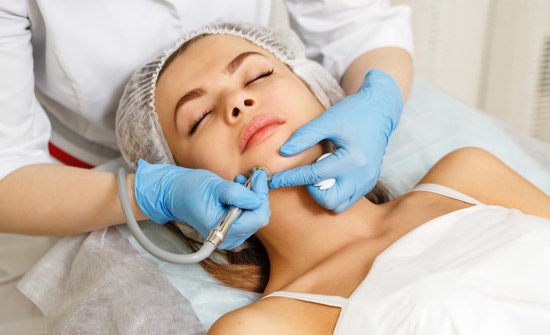
Modern research shows that how PDT is delivered has a major impact on both results and patient experience. We tailor protocols based on acne severity, skin type, and tolerance for downtime.
Photodynamic Acne Therapy
Two-Step Photodynamic Therapy (Pain-Minimising Protocol)
Recent randomised clinical research demonstrates that two-step PDT protocols can significantly improve patient comfort without compromising results.
In this approach:
- PDT begins with lower-intensity light activation
- This is followed by a controlled increase in fluence once partial PpIX activation has occurred
Clinical studies show:
- Significantly reduced treatment pain
- High patient satisfaction
- Comparable clinical improvement in acne severity
This approach is particularly valuable for patients who:
- Have lower pain tolerance
- Are anxious about PDT discomfort
- Require multiple sessions
Photodynamic Acne Therapy
Mild PDT Protocols (Improved Tolerability)
Newer “mild PDT” protocols use:
- Lower photosensitiser doses or modified formulations
- Shorter incubation times
- Reduced light intensity
Recent studies demonstrate that these approaches can:
- Achieve meaningful acne improvement
- Dramatically reduce pain and downtime
- Improve overall treatment acceptance
Mild PDT may be appropriate for:
- Patients with sensitive or reactive skin
- Those at higher risk of pigmentation changes
- Patients prioritising tolerability over maximal intensity
Photodynamic Acne Therapy
Laser-Assisted Photodynamic Therapy (LA-PDT)
In selected patients, PDT may be combined with fractionated Er:YAG laser prior to ALA application. This is known as Laser-Assisted PDT (LA-PDT).
How Laser Assistance Enhances PDT
Fractionated Er:YAG laser creates microscopic vertical channels in the skin that:
- Reduce the barrier function of the stratum corneum
- Improve penetration of ALA into sebaceous units
- Increase intrafollicular and intraglandular PpIX production
This mechanism is supported by high-quality photodynamic therapy research and may result in:
- Stronger sebaceous suppression
- Improved response in severe or treatment-resistant acne
Important Trade-Offs
LA-PDT is more intensive than standard PDT and is associated with:
- Increased inflammation
- Greater downtime
For this reason, LA-PDT is reserved for patients where maximising efficacy is prioritised over downtime, and only after careful medical assessment and discussion.
Photodynamic Acne Therapy
Who Is a Suitable Candidate?
PDT or Advanced PDT Protocols May Be Considered For:
- Persistent inflammatory acne
- Moderate to severe acne not responding to conventional treatments
- Acne associated with significant seborrhoea
LA-PDT May Be Considered For:
- Severe or treatment-resistant acne
- Thickened or fibrotic acne-prone skin
- Patients with lower pigmentation risk who accept increased downtime
PDT or LA-PDT May Not Be Suitable For:
- Darker skin types – Fitzpatrick IV–VI without careful risk assessment
- Known photosensitivity disorders
- Pregnancy or breastfeeding
- Inability to strictly avoid light exposure for 48–72 hours
A medical consultation is essential to determine the safest and most effective approach.
Photodynamic Acne Therapy
How PDT Fits Into Your Acne Plan
Photodynamic Acne Therapy is never used in isolation. Depending on your skin and acne pattern, it may be combined with:
- Medical-grade skincare
- LED light therapy
- Chemical peels
- Prescription topical treatments
- Oral medications where appropriate
- Lifestyle guidance for long-term control
Our aim is durable improvement, not short-term suppression.
FAQs
Frequently Asked Questions
Is laser-assisted PDT more effective than PDT alone?
Laser assistance may improve ALA delivery and treatment response in selected patients, but it also increases downtime and risk. It is not appropriate for everyone.
Can PDT protocols be adjusted to reduce pain?
Yes. Modern approaches such as two-step PDT and mild PDT protocols significantly improve tolerability while maintaining clinical benefit.
Will PDT cure my acne permanently?
PDT can significantly reduce acne severity, oil production, and inflammation, but acne is influenced by hormones and genetics. Maintenance treatment is often required.
Let's start
Your Next Step
If you have persistent or treatment-resistant acne, Photodynamic Acne Therapy — using standard or advanced protocols — may be an option.
A consultation allows us to assess your skin and select the most appropriate PDT strategy, balancing effectiveness, comfort, and downtime.
Photodynamic Acne Therapy
References
1.Qiu S, et al.
Two-step photodynamic therapy using 20% aminolevulinic acid and red light significantly reduces pain while maintaining efficacy in acne treatment.
Photodiagnosis and Photodynamic Therapy. 2025;46:103351.
doi:10.1016/j.pdpdt.2024.103351
PubMed: https://pubmed.ncbi.nlm.nih.gov/40192834/
2.Serra-Guillén C, Llombart B, Sanmartín O.
Mild photodynamic therapy with BF-200 ALA for acne vulgaris: clinical efficacy and tolerability.
Journal of Clinical Medicine. 2024;13(9):2658.
doi:10.3390/jcm13092658
PubMed: https://pubmed.ncbi.nlm.nih.gov/38647943/
3.Qureshi S, et al.
Photodynamic therapy in acne vulgaris: a systematic review of clinical outcomes.
Photodiagnosis and Photodynamic Therapy. 2024.
PubMed: https://pubmed.ncbi.nlm.nih.gov/39552358/
4.Sannino M, Cannarozzo G, et al.
Laser-assisted photodynamic therapy enhances aminolevulinic acid penetration and clinical efficacy.
Photodiagnosis and Photodynamic Therapy. 2024.
doi:10.1016/j.pdpdt.2024.103351
PubMed: https://pubmed.ncbi.nlm.nih.gov/38604709/